Marie
AI Headshots vs. a Real Photographer: What Are You Actually Paying For?
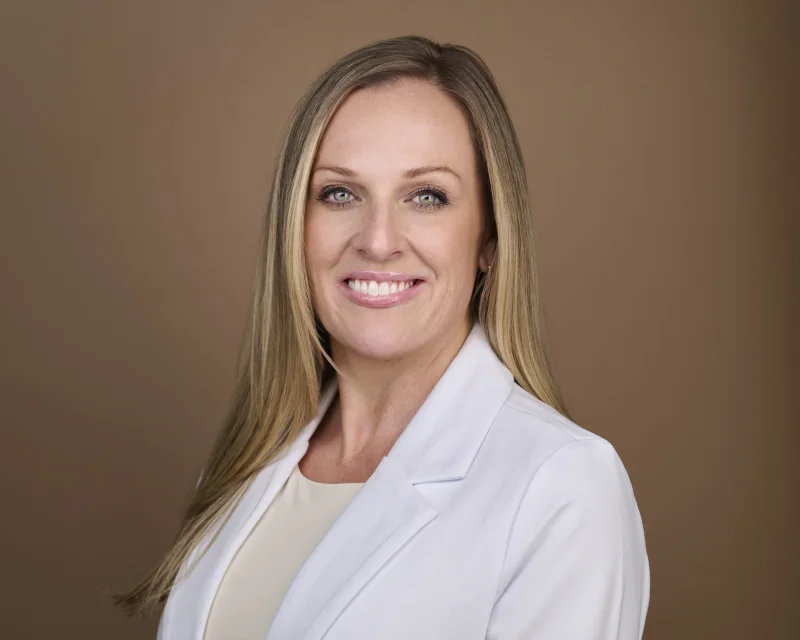
A client once took me to dinner after her session. She wanted to thank me, and she couldn't do it in an email. Over the table, she told me why. She looked at her photos and said, in her own words, "I didn't know I was still pretty."
I still get emotional when I think about it. Because she didn't thank me for a photograph. She thanked me for giving her back something she thought she had lost.
That is what a headshot is actually for. Not pixels. Not a square on LinkedIn. It is the moment a person sees themselves and feels something they did not expect to feel. Everything I am about to tell you about your three options comes back to that.
You Have Three Ways to Get a Headshot
If you need a professional photo right now, you have three real choices: an AI generator, a quick and inexpensive option like a CVS photo counter, a conference step-and-repeat, or a budget studio, or a photographer who does the full work. They are not the same thing, and the difference is not just quality. The difference is what you walk away feeling.
Let me be honest about all three.
Option One: AI Headshots
AI headshots look good. That is the trap. You upload some selfies, and the software gives you a polished, professional-looking image of a person who is almost you.
Almost.
Here is the problem. Most people notice. You look at the result and something feels off. The jaw is a little wrong, the eyes are not quite yours, the expression belongs to someone else. And because some part of you knows it is not real, you end up hiding behind a face that is not yours.
A headshot is supposed to help people recognize you. When you walk into the meeting, the interview, the event, the real you should match the photo. With AI, you are introducing yourself with a stranger's face. And there is no memory attached to it, because nothing actually happened. A machine made it in a vacuum.
It is pretty. It is just not you.
Option Two: The Quick, Inexpensive Option
The cheap option is not a quality problem. Let me say that clearly. The lighting will be good. The camera will be good. A conference step-and-repeat or a budget studio can produce a perfectly clean, classic corporate headshot. No problem there.
Here is what you are actually giving up.
You will be photographed exactly as you are at that moment. Nobody checks your collar. Nobody notices the necklace sitting off-center, or the wrinkle in the fabric, or the flyaway hair. You receive no guidance and no coaching. You stand where they tell you, they take the shot, and you move on.
If you happen to be a natural in front of the camera, you will get a good result. If you are like most people, the photo will be exactly what you walked in with. No lift. And when you look at that photo later, what you remember is standing in a line at a conference. Forgettable. Maybe even a little deflating.
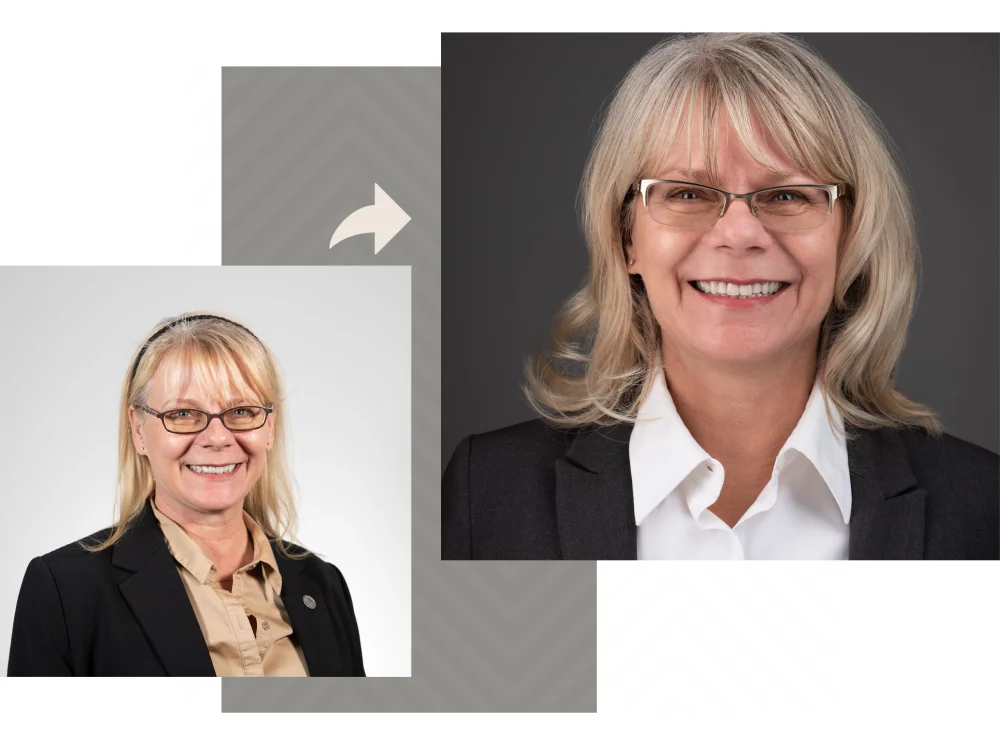
I have a photo of a client taken at one of those step-and-repeats, next to the one we made together. You notice the difference right away.
Option Three: A Real Photographer
This is where the two halves of the work come in, and most people only ever see one of them.
The first half is the stage. Before we talk about expression, I am setting everything. The perfect lighting. The exact camera height. Every hair checked. The way the fabric lands, whether there is a wrinkle, whether the necklace is centered on the neck. In a headshot, the crop is so tight and the space is so small that everything matters. This part is invisible in the final image, but without it, nothing else works.
The second half is the human part, and it is the harder one. My goal is not to photograph you like a journalist, capturing exactly what is there. My goal is to show you at your best. That means understanding how you work, and bringing you from where most people start, anxious in front of the camera, to where you need to be: confident, but not arrogant.
That confident person is not invented. They already exist. The anxiety is just covering them up. My job is to draw them out.
When I capture the first great frame of a session, I am genuinely thrilled. I think I am addicted to that feeling. But I have realized it is not the photograph I am addicted to. It is the moment of transformation. The instant someone goes from hiding to being seen.
What You Actually Walk Out With
Here is the truth underneath all three options.
People come to me for a headshot. What they leave with is the feeling of being one foot taller.
Taller is not about the image. It is about how you carry yourself when you walk out the door. It is your posture in the next meeting, your presence in the next room, the way you hold your shoulders when you step into the pitch. The photo is just the thing that gave it to you.
AI can make you look taller in an image, but you will not feel it, because you know it is not you. The cheap option photographs you at exactly the height you walked in at. But a real session, where someone sets the entire stage and then does the human work to draw out your best, does something different. You do not just look one foot taller in the photo. You leave one foot taller. And you stay that way.
Why It Matters
Every time you use your headshot, you re-feel how it was made. That is the part nobody talks about. Open LinkedIn, see your own face, and some part of you returns to the moment behind it.
With AI, there is no moment to return to. With the step-and-repeat, the memory is a line at a conference. But with a real session, the memory is the day you bet on yourself. The day someone took the time to see you at your best.
That is what my client felt at dinner. She was not reacting to a photo. She was reacting to being shown a truth about herself she had stopped believing. "I didn't know I was still pretty."
I cannot give that to everyone in the same words. But that feeling, the one foot taller, the surprise of recognizing yourself, is what every session is built to deliver.
Ready to Feel It?
If you have been putting off your headshot, or settling for something that does not feel like you, let's make something you are proud to walk out with.
You May Also Like
What to Wear for Your Headshot: A Guide for Women
Wear what you would wear to an important business meeting. A Phoenix photographer's guide to blazers, color, necklines, fit, and the one exception.
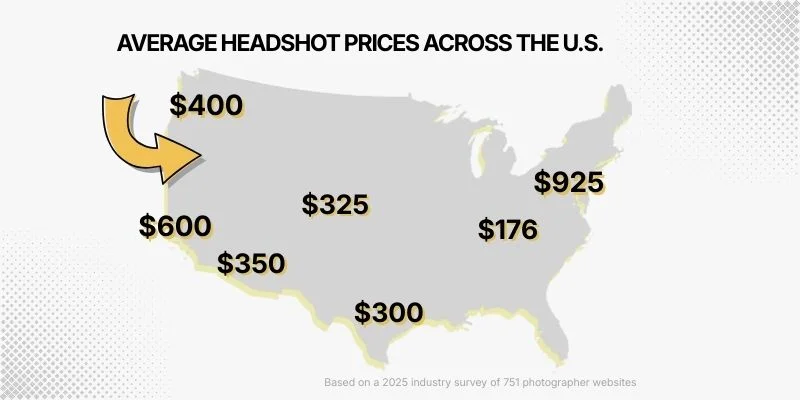
How Much Does a Headshot Cost in Phoenix, Arizona?
Professional headshot pricing in Phoenix ranges from $150 to $800+. Here's an honest breakdown so you know what you're paying for at each price point.
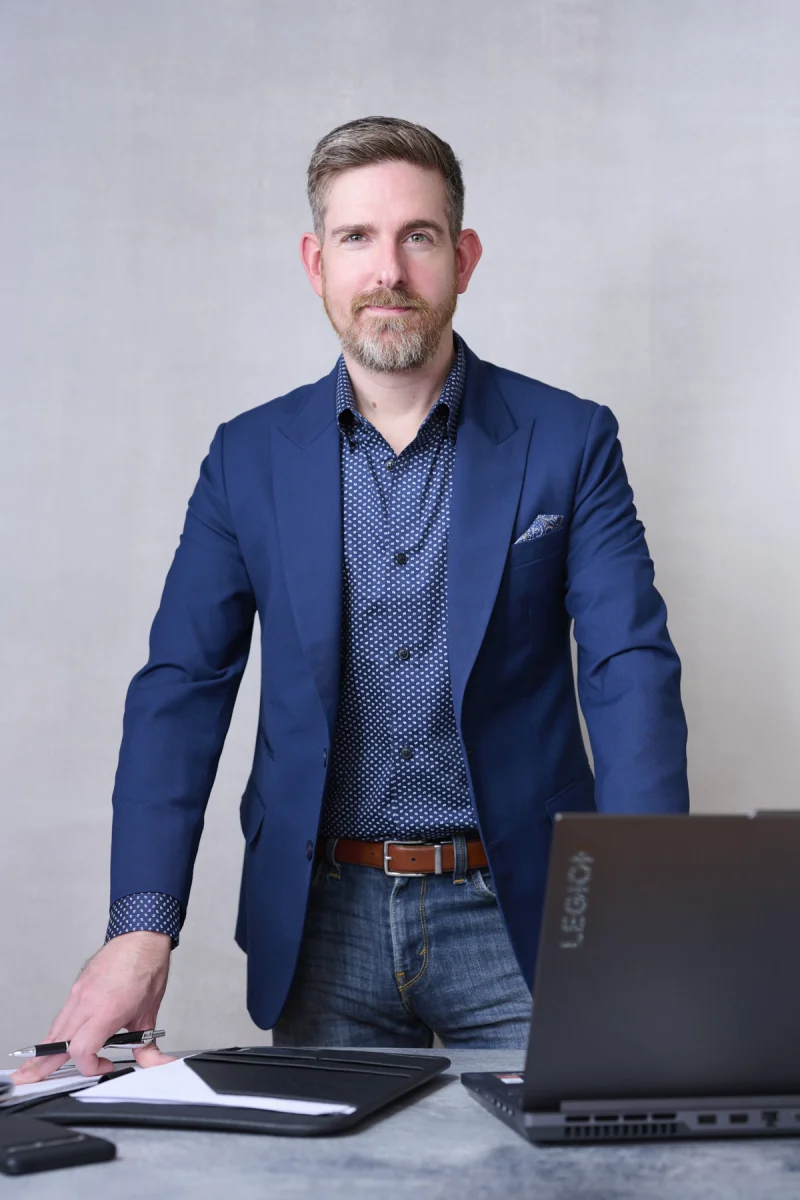
What to Wear for a Professional Headshot (Men's Guide)
Suits, blazers, or something else entirely? The right outfit depends on your industry, not a dress code. A Phoenix photographer's guide to colors, grooming, and common mistakes.
